THE HIDDEN ART HISTORY SERIES
Every place holds a history of seeing.
Beneath the familiar image of a city lies another city: one made by hands, memory, resistance, and imagination. The Hidden Art History Series follows those quieter currents. Across California and beyond, I explore how painting, public art, architecture, photography, craft, and community life shape the places we think we know. These books invite a slower way of looking—past the postcard, beneath the landmark, toward the people and creative traditions that give a place its depth. Each volume is a doorway into a distinct landscape; together, they form an expanding atlas of art, belonging, and cultural memory.
By Beau James Thomas
INDEX — TEN BOOKS
- 01 — FROM POPPY JASPER TO PUBLIC ART · MORGAN HILL
- 02 — BRUSHSTROKES OF SILICON VALLEY · SAN JOSÉ
- 03 — GOLDEN GATE GALLERY · SAN FRANCISCO
- 04 — PACIFIC VISIONARIES · CALIFORNIA
- 05 — SILVER HORIZONS · MONTEREY PENINSULA
- 06 — CANVAS OF RESISTANCE, PALETTE OF HOPE · OAKLAND
- 07 — THE ISLAND BENEATH THE IMAGE · MAUI
- 08 — FROM GARLIC FIELDS TO GALLERY WALLS · GILROY
- 09 — SEA LIGHT AND STONE TOWERS · CARMEL-BY-THE-SEA
- 10 — WHERE THE DESERT BECAME A STUDIO · JOSHUA TREE
Find your way into the series
Begin with a place you know, or follow a question into unfamiliar ground. These reading paths connect the books without erasing what makes each landscape distinct.
Cities, memory & public space
Start with Morgan Hill, San José, San Francisco, Oakland or Gilroy. These volumes follow creativity into civic life: murals, local institutions, working landscapes, artist communities and the public surfaces through which a place tells its story. Read across the cities to consider how art gives memory a visible form.
Coastlines & ways of seeing
Silver Horizons and Sea Light and Stone Towers approach the Monterey Peninsula through painting, photography, architecture and preservation. The Island Beneath the Image turns toward Maui, where Native Hawaiian knowledge, cultural survival and remembrance call for an attentive way of looking. Together, they invite reflection on the relationship between landscape and belonging.
A wider lens & the desert
Pacific Visionaries offers a statewide view across California’s many artistic traditions. Where the Desert Became a Studio brings that attention to Joshua Tree, following reuse, experiment and creative communities alongside the pressures of living in a changing desert. Move between the broad view and a particular place to see how histories meet.

Morgan Hill, California
From Poppy Jasper to Public Art
The History, Art and Cultural Life of Morgan Hill
A town’s creative life is written in more than its official landmarks. This volume follows Morgan Hill through Indigenous foundations, agricultural landscapes, labor and public imagination. Museums, performance, murals, sculpture, CURA Contemporary and maker culture enter a shared portrait of a place still becoming itself. Moving between inherited traditions and contemporary gathering spaces, the book invites readers to notice how beauty and cultural memory take root close to home.
San José, California
Brushstrokes of Silicon Valley
San José’s Layered Art History & Living Culture
Beneath the language of innovation lies a longer history of making. Indigenous weaving, Chinatown artifacts, Chicano muralism, museums, experimental galleries and the SoFA arts district reveal a San José shaped by many creative voices. This volume follows art through civic space and changing communities, asking what survives—and what becomes visible—as the technological landscape expands. It is an invitation to look beyond the region’s familiar identity and encounter the cultural life within it.

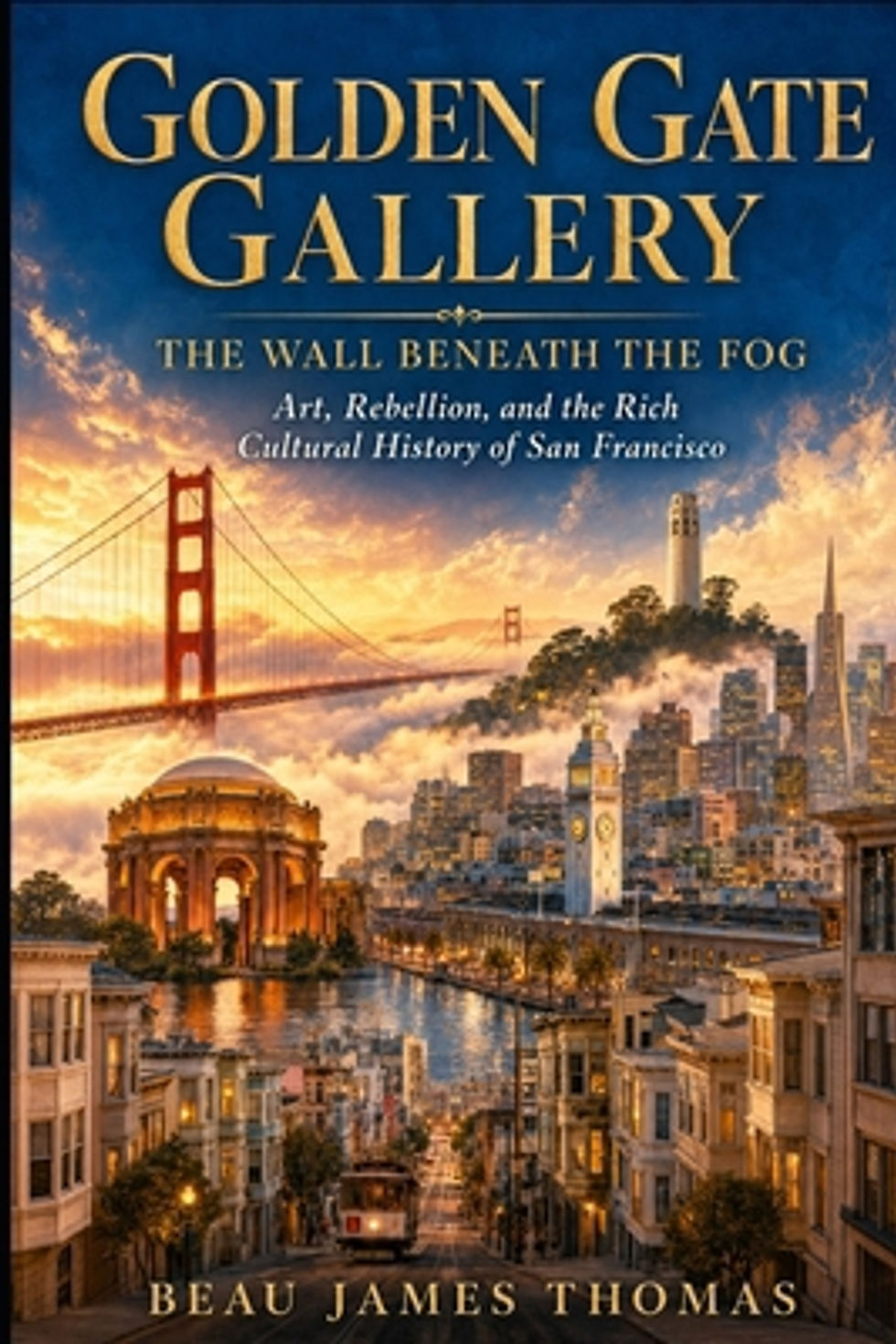
San Francisco, California
Golden Gate Gallery
The Wall Beneath the Fog: Art, Rebellion, and the Rich Cultural History of San Francisco
Fog softens a skyline; art preserves the marks of those who lived beneath it. This volume moves through Ramaytush Ohlone traditions, mission imagery and Gold Rush visual culture into Diego Rivera, New Deal public art and Bay Area Figurative painting. Beat and psychedelic graphics, Mission murals and punk zines extend the story into streets and communities. Across these changing forms, the book considers how creative expression negotiates identity, public space, displacement and the right to be seen.
California
Pacific Visionaries
California’s Rich Art History
California’s artistic landscape stretches far beyond a single movement or coastline. This statewide volume connects Indigenous making, mission and Gold Rush imagery, photography, Impressionism, modernism and New Deal art with assemblage, Light and Space, feminist practice, Chicano and Latinx art, and street culture. Along the way, land, labor and power remain part of the picture. The result is a broad invitation to consider whose creativity is remembered, how images shape place, and where new ways of seeing emerge.


Monterey Peninsula, California
Silver Horizons
The Art History of Monterey and the Peninsula
Along the peninsula, light becomes both a subject and a way of thinking. Monterey, Carmel, Pacific Grove and Point Lobos form the setting for this exploration of painting, photography, architecture and cultural institutions. The book follows the relationships between creative communities and the coast they inhabit, bringing questions of preservation and belonging into view. It invites readers to look past scenery alone and recognize the histories of attention that have gathered along these shores.
Oakland, California
Canvas of Resistance, Palette of Hope
The Art History of Oakland, California
Oakland’s art lives in acts of expression, collective work and the insistence on visibility. Indigenous traditions, protest graphics, murals and photography meet disability arts, industrial fabrication and artist-run spaces in this account of the city’s creative life. The book considers how making can hold memory and hope while communities face displacement and change. Its portrait of Oakland follows creativity through public surfaces and independent spaces, attending to the people who help give the city its visual voice.


Maui, Hawai‘i
The Island Beneath the Image
Art, Memory, and the Rich Cultural History of Maui
Beyond the postcard lies a place carried through knowledge, making and remembrance. This volume considers Maui through Native Hawaiian visual traditions, cultural survival and the changing images imposed by outside perspectives. Architecture, performance, landscape and community memory become ways of approaching the island’s deeper creative life, including Lāhainā’s cultural legacy. The invitation is to listen as well as look: to encounter art as part of a living relationship between people, history and place.
Gilroy, California
From Garlic Fields to Gallery Walls
The Hidden Art History of Gilroy, California
Fields and public walls belong to the same cultural landscape. This volume follows Gilroy through agriculture, labor, migration, architecture, murals and tree sculpture, attending to the local voices that give familiar places their depth. Community memory and grief are part of that story, alongside the impulse to make and gather. By tracing creativity through everyday civic spaces, the book asks how a city expresses what it values, what it carries forward, and how it remembers together.


Carmel-by-the-Sea, California
Sea Light and Stone Towers
The Art History of Carmel-by-the-Sea
Stone, sea and shifting light form a meeting place for imagination. This volume explores Carmel-by-the-Sea through painters and photographers, Point Lobos and the coast, historic studios, galleries, libraries, craft, theater and architecture. Preservation is woven into the story: creative communities make spaces, and those spaces carry creative memory. The book offers a slower encounter with a celebrated place, asking how sustained attention to landscape and built form can change the way we see.
Joshua Tree, California
Where the Desert Became a Studio
Joshua Tree’s Hidden Art History of Reinvention, Survival, and Creative Freedom
In the desert, distance and scarcity can become conditions for invention. This volume follows Joshua Tree through Indigenous knowledge, mining, homesteading, conservation, assemblage, reuse, experimental architecture, music and artist communities. It also considers tourism, housing and climate pressures within that cultural landscape. Abandoned materials and unconventional spaces open questions about value and possibility. The book approaches creative freedom as something lived in relationship with a demanding place, rather than a vision detached from its histories.

Look again. A place is never only what it first appears to be.
The books and the tiny paintings of the Hidden Art Series share one habit of attention: a patience for the overlooked, and a belief that unexpected discovery waits in the places we pass every day.
For library, educational, exhibition or editorial inquiries about the series, contact Beau James Thomas.